

Cellist Ettore Pagano, First Prize of the Cello Queen Elisabeth Competition 2026
On 30 June at Bozar, the young cellist Ettore Pagano was awarded First Prize of the 2026 Queen Elisabeth Competition, dedicated to cello. His virtuosity and musicality have captivated both the jury and the audience. Ettore Pagano was kind enough to answer a few of our questions.
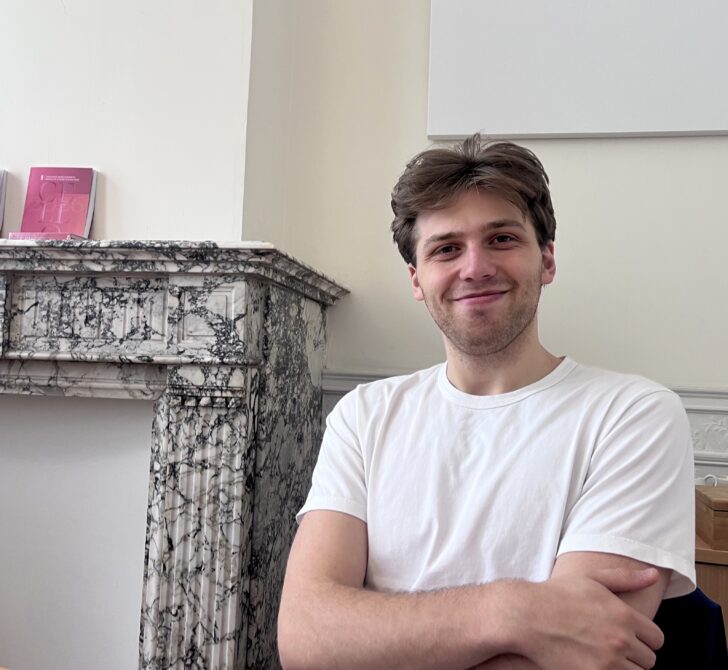
Ettore Pagano, First Prize of the 2026 Cello Queen Elisabeth Competition © Emilie Vanderhulst
ResMusica: Thank you for the opportunity to ask you some questions for ResMusica. How do you feel this morning?
Ettore Pagano : It’s like a dream, when they call your name, it’s like a dream come true, of course. But also, since when I decided to apply for this competition, the goal was this one. And I’m just happy and grateful, you know.
RM: I understand that there could also be an element of surprise
EP: It’s always a surprise, it would have been a surprise for every finalist. Because, you have like one twelfth chance to win at the end. And we are all winners, because the difference between me and the others are just like millimeters. Maybe one day you perform better, the other day another candidate is the winner.
This competition changed the life of all of us. And even to be just in the first round, in the
semifinal, we are already top 0.1%. So, even to just win this competition, to show… I mean, the broadcast of this competition also online is incredibly high. So, it’s overall more the performance than the prize.
I think a lot of people really liked also others’ performances as well. But they will remain in history as well. Likewise, I know this cellist, third prize, Leland Ko. He is such a great guy. And to bring like Barber’s concerto (Samuel Barber Concerto en la mineur op. 22) in the final is so brave. And I think it will remain in history, because it’s not played so often. And it will be like the recording of this concerto, at least for the next four years, you know. After the next cello edition. The level was extremely high.
RM: But we have to have a winner at the end of the day. So, we know you perfectly, I think, for all of us who follow the Queen Elizabeth competition. And also the fans of cello. But how would you present yourself, if you had to present yourself to our readers who happen to not know you?
EP : I would say I’m the most average person ever. I’m not, you know, I’m not really an artist, because an artist is usually very different. There is geniality. Of course, I hope I have geniality as well. But I’m a very normal human being, first of all. And I think, I hope and I wish that people see this first in me. Not that I’m a cellist, not that I’m a musician, not that I’m an artist. But a person and a very normal person, just like everybody else. Then, I mean, I, on the top of it, I like the cherry on top of my personality is the cello and the life of the cello and the music. So; I would like to let them, let the people know that they always have to separate the artist from the person. And for me, this is the most important thing. I mean, I also have other hobbies, of course. I’m not just 100% focused on cello. But, I mean, yes, that’s me.
And I would say, I don’t talk much overall, but I still try to bring brightness in the life of the others that are around me. So I might seem shy. Also yesterday, you know, for the Proclamation, I was a bit shy. I didn’t know what to do. But that’s my personality. When it comes to the stage life, I just want the music to write also, just like, just like if it’s a person, not myself. I don’t want to shine like the superstar. And I want to, I want to be the most, like the friend that everybody wants, you know.
RM: You entered a lot of competitions. And you already won a lot of prestigious competitions prizes. Why did you decide to enter this one? And how did you find it quite special from the other ones?
EP : Well, this competition is really special. I started very early, maybe one year after I started cello to do competitions. Because I, I was very shy also when I was a child, much more shy. And I couldn’t play in front of the audience. Like my, my arm was really blocked in front of the audience because I was scared. So the only way like my mom found to free myself from the stress was to play in front of the audience. Of course, I didn’t have concerts back then. So the only way was to do a lot of competitions, even small one. Like the prize was like 50 euros, you know, very small competitions. But I did a lot of them, eventually bigger one, bigger and bigger and bigger. And then with the biggest one here now. So, I mean, I started not with the purpose of winning them. But with the purpose to
to play in front of an audience. And then I started liking them also because I won some of them. And, you know, at some point you also like what you’re good in. Of course. And you also like, of course, what, what you’re talented in and what your soul tells you. It’s good for your soul, your personality. I mean, maybe it’s in the DNA.
I don’t know. But I mean, it’s, it’s been a great, great journey.
I think this is the last one for sure. The last competition. There is no point of doing another competition after Queen Elizabeth. And I will miss them also because it’s been part of my whole life now, 15 years doing competitions. And there is this kind of stress, but it’s a different kind of stress before entering the stage. And of course, you know, competition and art is two different things. And it’s really a borderline thing that you mix them together to do a competition for music. But, I mean, at the end of the day, you know that if you win, it’s not because you’re always the best. And if you lose, it’s not because you’re necessarily not the best. It’s a matter of taste sometimes. You have to know that. And you have to humbly realize it if you are the winner or if you are the loser. Either way. I mean, I didn’t win every competition. Last competition I did, I was second prize. I mean, it’s still incredible. But, you know, hearing some words from some jury members of the last competition, I really realized something. And this jury member said, you learn much more when you don’t win. And, I mean, from that word, I actually realized that you always have to criticize yourself more than the others. The others will always say bravo to you, even though maybe they don’t think so. Of course, even if they think so. You think so in classical music. But I always criticize myself a lot. And I always think I’m not enough. But I think this is the life of every musician at the end of the day. To improve ourselves every day much more. But in this sense, we are very close to us. Sportsmen. You have to be always happy about your performances. A bit.
RM: Maybe we can talk about this Prokofiev’s Sinfonia Concertante you performed during the final round? For example, we really enjoyed the mix of your intonation. Quite robust. But also it was really lyrical, really singing. And it felt so natural. And also you striked the balance with the orchestra, which is not easy to find.
EP: No, it’s not easy to find. Sometimes you have to be very delicate, soft. Sometimes extremely powerful. So that’s why there is everything in this Prokofiev. And that’s why I chose this piece. Even though I just played once before the final. It’s very tough to play this piece. Because you have to know by memory every orchestra moment. Every instrument that is playing in every moment. Especially because it’s a symphony concertante. It’s not a concerto. It’s a continued dialogue with the orchestra. It’s been a great choice. You have to combine intonation, as you said, and preciseness and musicality. But I wouldn’t
divide them. Especially in competition. I think precision and technique is something we now divide. But in the ancient times, they were considering technique as a form of art. And I think so. Perfection is a form of art at the end. Just like musicality is. I mean, I was for sure not perfect. It’s something I’m pursuing for life. And musicians always pursue this. But you don’t have to be crazy about it. At the end, imperfection is what people want to listen to. If you want to listen to perfection, just play some AI music. Just let AI play this music for us if you want perfection. But I believe that the audience at some point will come to the concert because they want to feel humanity. They want to feel this little crack in the perfect interpretation. So, I mean, of course, I felt that the audience really liked it and there was a great feeling in the hall. But I didn’t expect it anyway because the jury is always something else. So I just tried to play for the audience, to be honest. Not thinking about the jury at all. It was just a concert for me.
RM: How did you work to build your programs for the different rounds of the Competition?
EP: I tried to really push more and more with the programs. Like I didn’t do normal
pieces in the semifinal. I played Alfred Schnittke’s sonata (Sonate 1, op. 129), which is also extremely difficult and extremely interesting, fascinating piece. I love Schnittke. But you have to be always in the middle between being too boring and too normal and being too excessive in the interpretation. You have to stay there, to navigate in this line and to find what’s interesting for the audience, for the jury, but for yourself especially. Just play for yourself, close yourself in the bubble. And I mean, the choice of the repertoire is extremely important. You can really mess and not go to the final if you choose the wrong piece, the wrong repertoire. I know that my strength is Russian music at the end. So, Schnittke was great.
My second recital was with Prokofiev anyway. So also Prokofiev is quite close to me, I have to say. And in the first round, I chose maybe the most challenging, technically, Boccherini sonata (Sonate en si bémol majeur G.8).
And also not the Nadia Boulanger that everyone played (Trois pièces est une œuvre pour violoncelle et piano de Nadia Boulanger. Trois Pièces. NB 45), but this Joseph Suk’s piece (Ballade op.3). And I think also Joseph Suk is Russian, right? Anyway, I mean, you have to have the right balance between normal music and something not very much played.
RM: Could you tell us a little about the instrument you were playing? And maybe also you can tell us about the bow you used during the Queen Elisabeth Competition?
EP: They are both modern. The bow is from Tibor Kovács, which is a Hungarian-French bowmaker. I feel it’s great for the feeling. I have to feel a lot in my hand. You know, it’s just hand prolongation, the bow. And it’s extremely important, much more than people think. So I really enjoyed playing with this bow in this competition, even though I had to rehair it a couple of times, because, you know, I have lost a lot of bow hairs in about one month. I will have to do it again. For the cello, I have tried some cellos for this competition. I was having some choices at home. But at the end, maybe this is more pushy, more powerful, especially for the final round. You have to shine and go out from the orchestra sound. Sometimes, if it’s not a really extremely good old instrument, it will be just average. Not every old instrument is great as we think. And some new instruments are also extremely good. But I have to say, this instrument especially, it’s just two years old. And the luthier built this instrument after listening to one of my performances. So it’s really… You put it together. Sewed on me.
RM: That’s fantastic
EP: It’s sewed on me, yes. And I feel it, I feel it. I also shaped him, he shaped me. It’s a continued dialogue with the instrument.
RM: What’s the name of the luthier, if I may ask?
EP: Yes, it’s an Austrian luthier, Wiltrud Fauler.
RM: So the Pablo Casals Foundation, they lent you the Pablo Casals cello, the Goffriller, for like four years. So how will you welcome this instrument?
EP: I mean, I’m so excited to try it today for the first time. And for me, it’s very close because Casals is a legend himself. And also, you know, my teacher was Antônio Meneses, and the teacher of Meneses was Antonio Janigro, and the teacher of Janigro was Gaspar Cassadó, and the teacher of Cassadó was Casals.
RM: It’s like a circle.
EP: Yes. So there is a chain, and I feel this, you know. I would really love to tell what’s
going on to Antonio Meneses, but, you know, he’s passed away now. And for me, it’s very important because, like, he always said and appreciated Casal’s playing of the Bach Suites. For Meneses, it was the best recording ever. And it’s like going back to the origin of my academic studies, you know. Meneses was really so important, and going back with Casal’s instrument is… I will find a bit of Meneses’ sound also in that instrument, maybe.
RM: May we have a word on the CD you recorded ?
EP: Where did you find it ? Because it’s not on Spotify yet. But I will have to put it on Spotify, probably. But no, it’s great. It’s a cello solos CD. I love cello solos also because it’s so challenging and you can… It’s only up to you what’s going on in the interpretation. It’s only up to you what’s going on. So I’m very proud to have played such a difficult repertoire with Zoltán Kodály. I love Kodály. It’s maybe one of the most difficult pieces ever written for cello. Actually, the CD is called Novecento, which is 1900s. And with Gaspar Cassadó, with György Ligeti, it’s a journey between these composers that rediscovered the cello solo after Bach. There has been nothing for 200 years and then these composers rediscovered it.
RM: I have a last question : you have a technical piece of advice or something that you could communicate to young cellists or young soloists or even young musicians who want to enter such a musician career?
EP: Well, the difficulty is always to not lose focus. So, of course, you do competition to
win. But never lose focus on what’s the real music and why you do music. It’s not to win something. It’s not for the celebrity. It’s not for the success. Never lose focus and always be creative and always try to be wondered by music every day. Even if you’re practicing the same piece for every day, just be wondered by music every minute you’re practicing, you’re playing. It’s the most basic one, but the most important one that my mother also tells me every day. Just play music. Don’t think about competition, pressure, stress. Just play music for yourself.

Ettore
mio padre era studente di Alexanian nella scuola di Casals.
tuo
Damir